
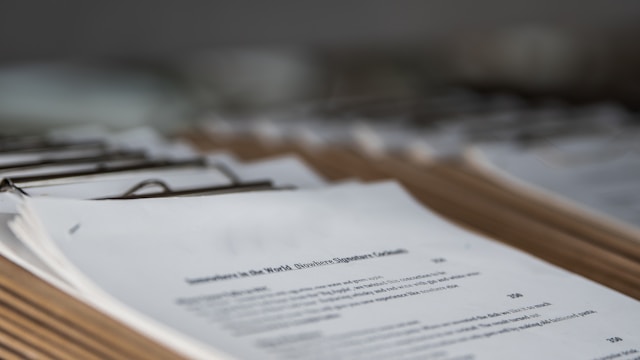
Paperwork has a way of piling up quietly: a resume that needs updating, a letter that's overdue, a contract that's been "getting to it" for weeks. In 2025, there's little reason for routine paperwork to still feel this heavy. Between structured templates, guided tools, and digital workflows, most of the documents people put off can now be handled in a fraction of the time they used to take, without sacrificing quality.
This guide covers exactly why paperwork tends to pile up, and a practical set of habits for handling it faster without letting quality slip.
Why Paperwork Still Feels Overwhelming
The friction usually isn't the content of the document itself: it's the uncertainty around structure, formatting, and getting started. A resume, a formal letter, or a legal agreement all feel bigger than they are when you're staring at a blank page with no clear starting point. That uncertainty is exactly what causes procrastination on tasks that would otherwise take only minutes, and the longer a document sits untouched, the more daunting it tends to feel.
Start With the Right Format, Not a Blank Page
The single biggest shift in how people handle paperwork in 2025 is starting from a structured template rather than an empty document. A good template has already made the structural decisions (sections, headings, formatting), so you're filling in specific details rather than inventing a format from scratch each time. This one change alone often turns a task that felt like it required an hour of uninterrupted focus into something that fits comfortably into a short break.
Batch Similar Documents Together
If you have several similar documents to produce (updating a resume for multiple applications, sending several personalized letters, drafting agreements for multiple clients), handle them in the same sitting. Once you're in the right mindset and structure for a document type, producing several versions in a row is far more efficient than spreading them out and re-orienting yourself each time.
Keep a Master Version for Frequently Updated Documents
For documents you update often (a resume, a standard client agreement, a recurring letter template), maintain one comprehensive master version, and adapt from it for each specific use rather than starting over. This turns most paperwork into an editing task instead of a writing task, which is almost always faster and less mentally taxing.
Use Tools Built for the Specific Document Type
A general-purpose word processor works, but it requires you to make every formatting decision manually. Tools built specifically for resumes, letters, or legal documents already understand the expected structure for each, which removes an entire layer of decisions you'd otherwise have to make yourself, and reduces the chance of missing a section or convention specific to that document type.
Set Aside Dedicated Time, Not Just "When I Get to It"
Paperwork that gets pushed to "whenever I have a free moment" tends to never get a free moment. Blocking even thirty focused minutes, paired with a structured template, is usually enough to finish a document that might otherwise linger for weeks. Treating it as a scheduled task, rather than an open-ended one, is often the difference between it getting done this week or getting pushed indefinitely.
Review Once You're Done, Not While You're Drafting
Trying to perfect every sentence while drafting slows the process considerably. It's usually faster to get a complete first draft down using the template's structure, then go back for a single, focused review pass afterward, catching typos, tightening language, and confirming every section is accurate before considering the document finished.
Where Resumly Fits Into This
Resumly brings resumes, letters, and legal documents together under one guided, template-driven process, so handling any of them follows the same fast, structured approach: no blank pages, no reinventing formatting each time.
Final Thoughts
Paperwork feels heavy mostly because of uncertainty, not actual difficulty. Start from the right structure, batch similar tasks together, and use tools built for the specific document you need, and most of what's been sitting on your to-do list can be finished far faster than it feels like it should take.